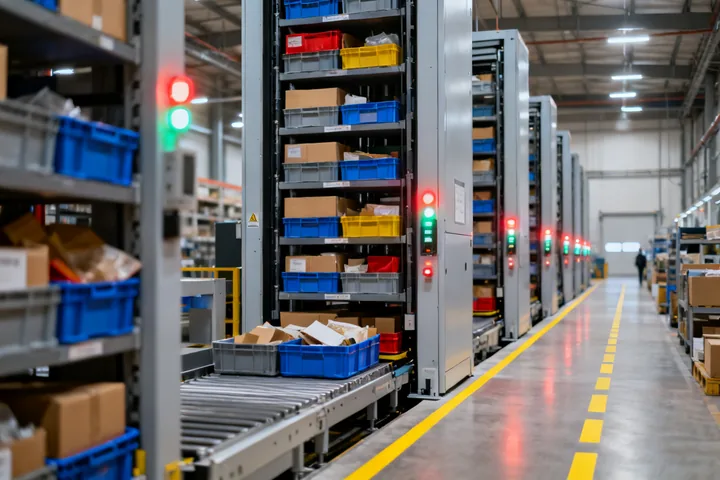
E-commerce fulfillment
Volatile A/B/C SKU bands, sharp evening peaks and tote-heavy order lines make tray dwell and buffer occupancy important. The concept should cover replenishment, exception recovery and a fallback path when a bay is unavailable.
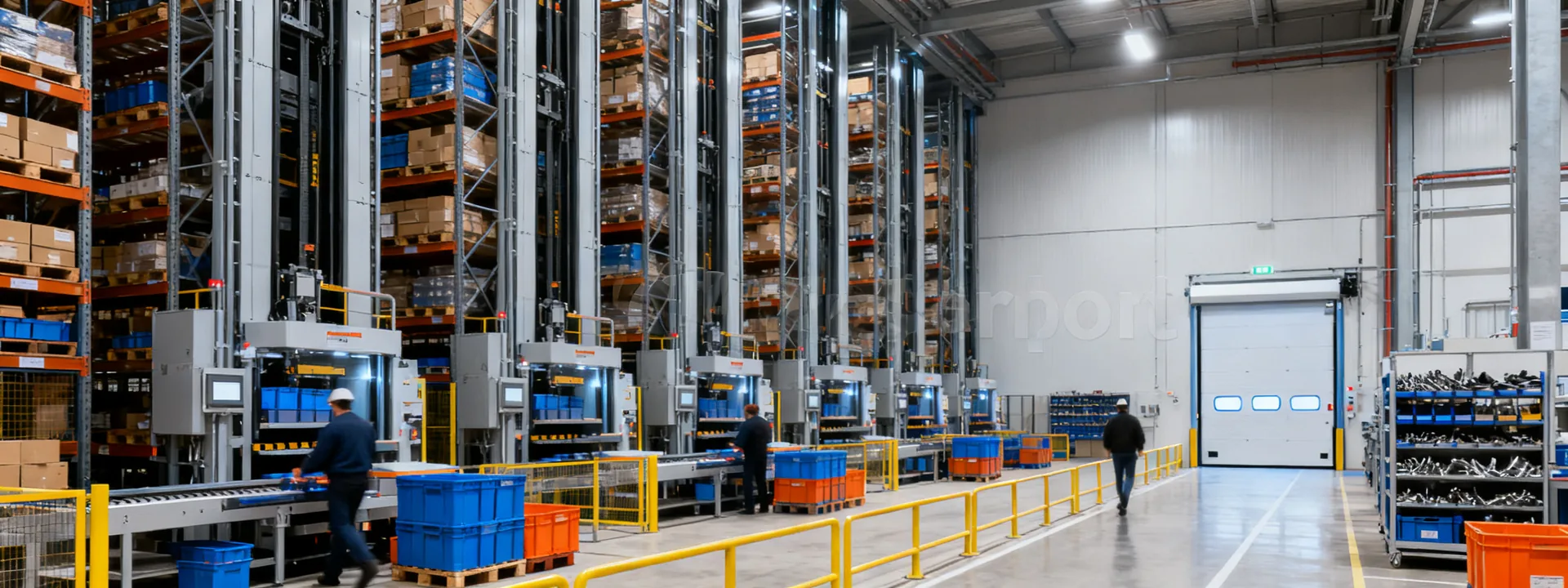
A vertical storage bay serving e-commerce peaks faces different constraints from a spare-parts crib cycling beside a production cell. Compare SKU depth, peak factor, temperature, pallet/tote mix and safe recovery before selecting equipment.
Volatile A/B/C SKU bands, sharp evening peaks and tote-heavy order lines make tray dwell and buffer occupancy important. The concept should cover replenishment, exception recovery and a fallback path when a bay is unavailable.
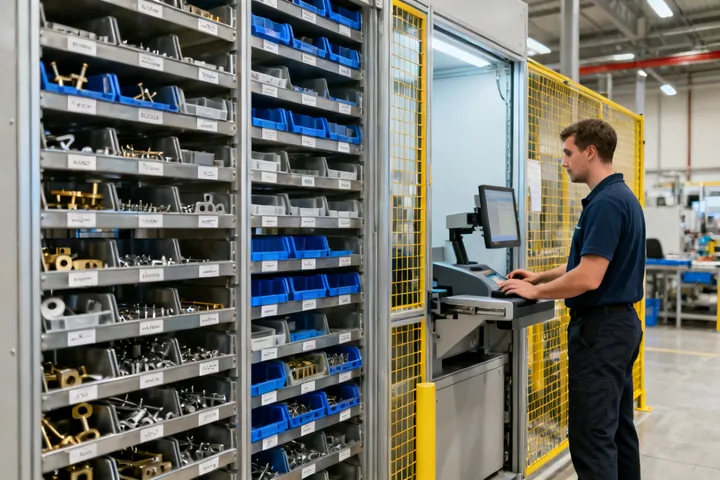
Kits and work-in-process bins may be eccentric or transferred by carts. Sizing must address point load, tray height rules, cycles per hour, shift duration and how production continues during planned service.
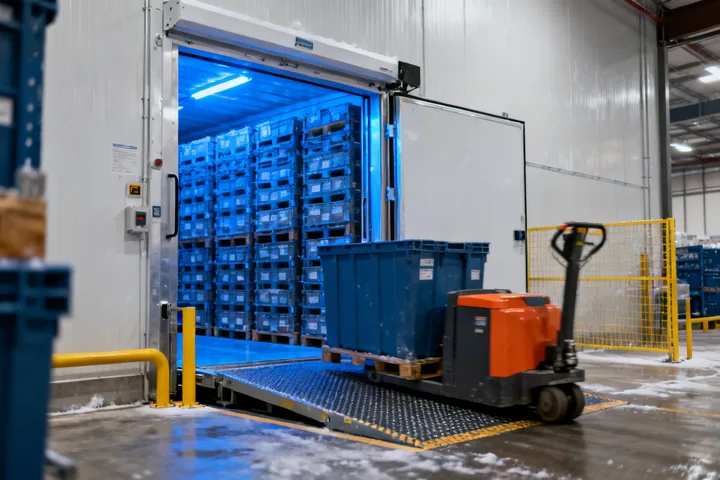
Low temperature changes seal behavior, condensation risk and surface traction. Door-open limits can compress the transfer window, so rate assumptions must include dwell and exception recovery rather than ideal tray cycle time alone.
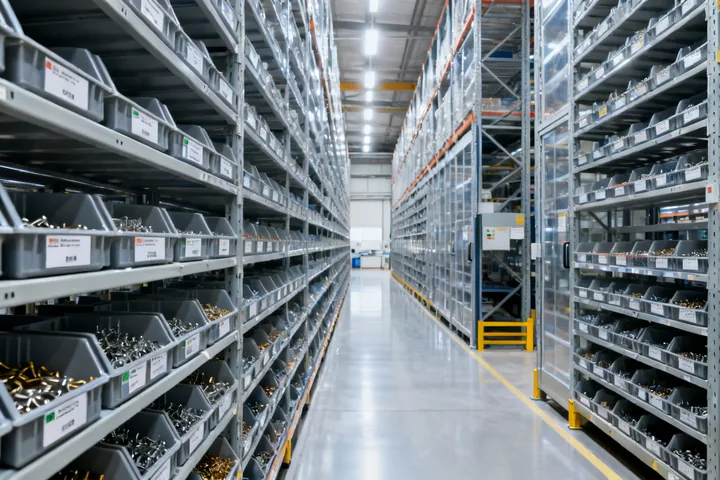
Deep SKU catalogs favor inventory cube utilization, but selectivity and emergency retrieval still matter. Maximum density may be less valuable than direct access for critical spares and a clear manual fallback for urgent lines.
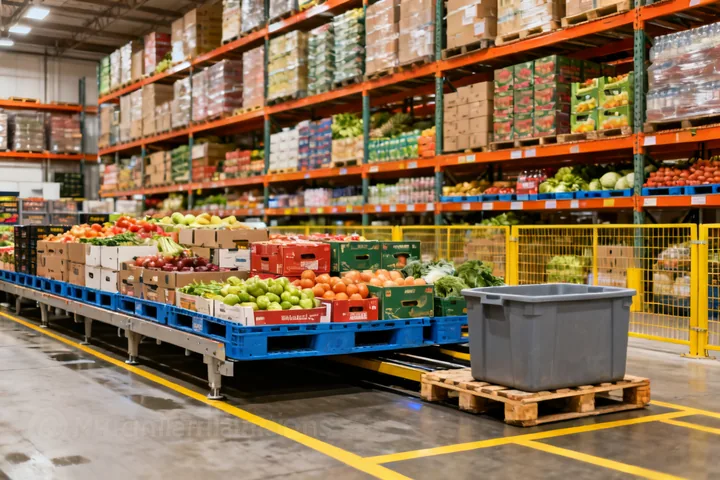
Scheduled waves, mixed cases and sanitation zones affect materials and installation details. The selected duty and enclosure approach must match the actual cleaning method; generic environmental claims cannot replace model-specific review.
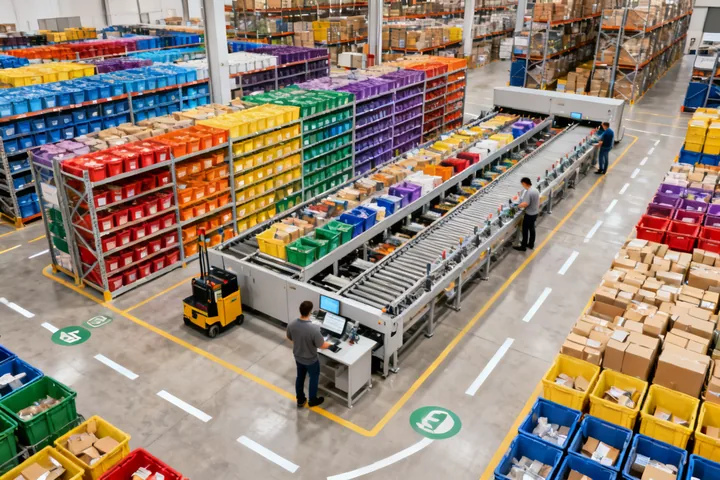
Client segregation, contract-driven peaks and mixed temperature bands introduce identity control, billing evidence and frequent human interaction. Tray rules, access rights, training and peak windows should be evaluated together.
Peak throughput favors short ideal tray cycles under a defined SKU mix and uninterrupted sequence. Resilient flow reserves time and physical access for interlocks, replenishment, queuing, inspection, reset and manual fallback. Neither priority is universally correct. The acceptance test should state the order profile, buffer condition, test duration, exclusions and recovery events so the chosen balance can be reproduced.
Fixed automation argues for deterministic capacity, mature controls and stable goods-to-person presentation when SKU velocity and routes change slowly. Flexible robotics argues for faster phasing and layout adaptation when demand is volatile. A Modula storage decision should compare both sides against the same evidence: order lines per hour with SKU mix, inventory cube utilization with selectivity, buffer occupancy, mean time to repair, brownfield cutover windows and WMS/WCS interface ownership. Density without fire and maintenance access is not a complete design; flexibility without stable load presentation is not either.
Rated tray load must include center of gravity and dimensions. Usable locations differ from gross slot counts by load class. Cold-chain door-open time can erase theoretical pick rate. Multi-client 3PL segregation can reduce shared-buffer efficiency. These limits are not defects in the conversation—they are the conditions that make FAT/SAT scripts reproducible.
Tell us what arrives, who picks it, how often trays move, which systems own identity and what must happen when the normal sequence stops.